Showing posts with label yvette mimieux. Show all posts

Sunday, May 29, 2022

Death Takes a Holiday (1971)


          If the title of this telefilm seems familiar, it’s because the play upon which this picture was based also provided source material for the Frederic March melodrama Death Takes a Holiday (1934) and the Brad Pitt romance Meet Joe Black (1998). In all iterations of the story, Death briefly assumes human form in order to investigate why humans cling so dearly to life, only to fall in love with a woman while spending time among the living. While not as impressive as the other Hollywood adaptations, the 1971 version on Death Takes a Holiday is palatable because the underlying storyline is so intriguing and because supporting performances elevate the experience. Also worth mentioning is the florid but sensitive script by veteran TV script Rita Lakin—even though her style tends toward soapy breathlessness intermingled with ornate speechifying, she connects with a handful of poignant moments. Sometimes neutralizing her work is graceless direction by Robert Butler, a three-time Emmy winner who did better work elsewhere; one assumes Butler was constrained by a meager budget and schedule.
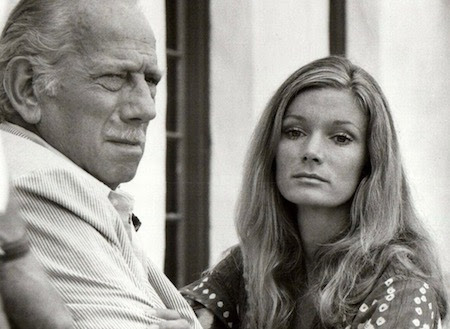
          In the waters off a private island, Peggy Chapman (Yvette Mimieux) seemingly drowns, only to wake on shore alongside mysterious David Smith (Monte Markham), whom she assumes saved her life. Peggy invites David to her family’s nearby compound, where the large clan has gathered for a celebration. Some of the Chapmans welcome David warmly, but Peggy’s aging father, retired judge Earl (Melvyn Douglas), senses danger. As David and Peggy become more enamored of each other, Earl learns about something bizarre happening on the mainland—since the time of David’s arrival, no one on Earth has died. This causes Earl to realize that he’s seen David before during near-death experiences. Thus begins a strangely compelling cycle of philosophical discussions on the place mortality occupies in the universe, leading eventually to Earl’s attempts at changing his family’s destiny. Without Douglas and Myrna Loy (who plays his character’s wife), Death Takes a Holiday would be nearly disposable because Markham and Mimieux are, respectively, mannered and shallow. (Rendering equally perfunctory work is costar Bert Convy, whose character competes with David for Peggy’s affections.) Nonetheless, Douglas and Loy lend so much gravitas that their scenes cast a regal glow across the entire movie.

Death Takes a Holiday: FUNKY

Sunday, December 24, 2017

Journey Into Fear (1975)


          Featuring a random assortment of familiar faces, this Canadian production offers a pedestrian new adaptation of a 1940 spy novel previously adapted for the screen in 1943 by Joseph Cotten and Orson Welles. The 1975 version of Journey Into Fear is pleasant enough to watch, but because it’s almost all plot, those who don’t lock into the storyline early are likely to get bored during long exposition and/or suspense scenes featuring leading man Sam Waterston. Although he does credible work, the only fun sequences in Journey Into Fear are those with costars Donald Pleasence and Vincent Price. Pleasence combines his characteristic fidgety energy with a campy Turkish accent, while Price, taking a welcome break from playing cartoonish ghouls, lends sophistication to the role of a cold-blooded pragmatist.
          The murky plot involves geologist Graham (Waterston) visiting Turkey to explore oil resources, even as nefarious characters repeatedly try to kill him. Local cop Col. Haki (Joseph Wiseman) tells Graham he can’t leave Turkey until a criminal investigation related to one of the attempted murders is resolved, so before long Graham gets enmeshed with sketchy characters including the nervous Kuvelti (Pleasence) and the obsequious Kupelkin (Zero Mostel). Graham also begins a romance with French singer Josette (Yvette Mimieux) before finally meeting his main adversary, the suave Dervos (Price). That this brief synopsis excludes significant characters played by Ian McShane and Shelley Winters indicates both how overstuffed the storyline is and how many different types of acting are on display. Cohesion is not the order of the day.
          Appearing fairly early in his long screen career, Waterston performs with considerable authority, but because his role is so underwritten, Waterston often blends into the scenery. (One wishes Mimieux, chirping in a bad French accent, did the same.) While McShane is suitably menacing in a mostly wordless role, only Pleasence and Price bring real flair—the very quality that made the Welles/Cotten version enjoyable. It’s especially pleasurable to watch Price play someone closer to the sophisticate he was offscreen, though the villainous nature of his character keeps the role on-brand.

Journey Into Fear: FUNKY

Friday, September 22, 2017

The Delta Factor (1970)


Dopey intrigue adapted from a Mickey Spillane novel, which means viewers should brace themselves for lots of stereotypical dames and goons, The Delta Factor celebrates the crudest sort of machismo. Morgan (Christopher George) is a smooth-talking scoundrel who drives ladies mad with desire, and who grins his way through car chases, fistfights, shootouts, and the like. Naturally, he knows how to drive any vehicle, how to win any game of chance, and how to identify compatriots in any foreign locale. Some Spillane stories channel his fascination with masculine energy into tough parables about the elusiveness of moral clarity, but The Delta Factor plays like a goofy, 007-inflected male fantasy. Many scenes are laughable, whether they involve Morgan vanquishing some lady with his superhuman virility or Morgan defeating a horde of soldiers with his spectacular marksmanship. The idiotic narrative goes something like this—after escaping from jail and getting recaptured, Morgan is offered a reduced sentence in exchange for going to South America on behalf of the U.S. government and liberating a political prisoner. Keeping tabs on Morgan during his mission is a slinky Fed named Kim (Yvette Mimieux), and complicating the situation is Morgan’s plan to recover $40 million in missing cash, then flee. Lots of stuff happens in The Delta Factor, so it’s never boring, per se, but, man, is this picture silly. Character motivations run the gamut from inconsistent to trite, narrative logic is in short supply, and the production looks and feels cheap. (What’s with the color of Kim’s hair changing from scene to scene?) George has fun playing the living incarnation of male id, Mimieux rocks a bikini well, and the villains are suitably swarthy—but The Delta Factor is pathetic compared to the James Bond epics it so desperately tries to emulate.

The Delta Factor: LAME

Sunday, December 20, 2015

Devil Dog: The Hound of Hell (1978)


          Incredibly, the year 1978 birthed not one but two movies about dogs serving supernatural villains, the theatrical feature Dracula’s Dog (also known s Zoltan, The Hound of Dracula) and the made-for-TV thriller Devil Dog: The Hound of Hell. In the telefilm, familiar actors trudge their way through a ridiculous plot, the titular canine accrues an impressive body count, and the whole thing culminates in a low-rent FX sequence that feels like an excerpt from a fever dream. In a too-brief prologue, a Satanist (Martine Beswick) and her accomplices purchase a female German Shepherd from a breeder, then hold a ritual in which Satan is summoned from Hell in the form of a dog to breed with the unfortunate Shepherd. Then the movie introduces businessman Mike Barry (Richard Crenna) and his family—wife Betty (Yvette Mimieux), daughter Bonnie (Kim Richards), and son Charlie (Ike Eisenmann)—in their quiet suburban neighborhood. The family dog is killed in a mysterious hit-and-run accident, and soon afterward one of the Satanists (R.G. Armstrong) turns up in the guise of a traveling fruit vendor who just happens to have adorable German Shepherd puppies available for free adoption. Mike’s kids fall in love with one of the pups, so the dog is given the name “Lucky” and welcomed into the Barry home.
          Weird things start happening immediately, and then people start dying in horrific ways after crossing paths with Lucky. Naturally, Mike is the only person to make the connection, because his loved ones fall under Lucky’s unholy spell. Cue the usual drill of Mike saying to people, “I know this sounds crazy, but . . .” The storyline eventually reaches cartoonish levels of absurdity, as demonstrated by the scene in which Mike tries with no success to kill Lucky with a gun, and the bizarre passage during which Mike travels to Mexico (!) to find an ancient wise man (!!) who tattoos a magical pattern on Mike’s hand (!!!). And we haven’t even gotten to the FX stuff yet. As directed by horror veteran Curtis Harrington, Devil Dog: The Hound of Hell isn’t quite as zippy as it sounds, but the sheer silliness of the endeavor guarantees a high kitsch factor. Crenna looks uncomfortable in every scene, like he’s got a charley horse he can’t shake, and it’s a kick to see Eisenmann and Richards—the kids from Disney’s Witch Mountain movies—acting together in a lesser-known project.

Devil Dog: The Hound of Hell: FUNKY

Wednesday, June 24, 2015

Jackson County Jail (1976)


          Thanks to credible characterizations and solid acting, Jackson County Jail is a cut above the usual drive-in sludge from the Roger Corman assembly line. Whereas myriad similar films from Corman’s ’70s companies use the women-in-prison angle as an excuse for cartoonish titillation, Jackson County Jail is played totally straight, emphasizing the horror of abuse and the tragedy of lives squandered on criminality. Calling Jackson County Jail a real movie might be stretching things, since the picture is a sensationalistic compendium of violent vignettes, but it’s a drive-in flick that a thinking viewer can watch without feeling totally ashamed afterward. Among other things, the movie features Tommy Lee Jones in one of his first big roles, and he elevates every scene in which he appears.
          Continuing his practice of providing juicy starring roles to onetime leading ladies whose careers had lost momentum, Corman cast delicate beauty Yvette Mimieux to strong effect in Jackson County Jail. Playing a confident professional woman whose sheltered life experience mostly comprises time spent in Los Angeles and New York, Mimieux seems appropriately out of place once her character falls into a web of crooked redneck cops and noble hillbilly thieves. Specifically, Dinah (Mimieux) leaves LA after discovering that her longtime boyfriend is unfaithful. Somewhere in the boonies, Dinah foolishly picks up two hitchhikers, who steal her car and possessions—including her ID—at gunpoint. Next, a local sheriff (Severn Darden) places her in jail for vagrancy. When the sheriff leaves the police station for the evening, night deputy Lyle (William Molloy) rapes Dinah, but during the assault she shoves him against cell bars, delivering a fatal head injury. Then Coley Blake (Jones), the career criminal in the next cell, grabs the inert Lyle’s keys and leads Dinah in a jailbreak. During the ensuing getaway and manhunt, Dinah becomes friends with Coley, learning his cynical perspective on life.
          Written by Donald Stewart, who later worked on fine films including Missing (1982) and the first three Jack Ryan adventures, Jackson County Jail is humane and intelligent, even if the story occasionally lapses into trite car chases and gunfights. The movie also benefits from stalwart turns by supporting players Robert Carradine, Howard Hesseman, Nan Martin, Betty Thomas, and Mary Woronov. And on some level, the horrors of this movie’s vivid rape scene provide balance for the innumerable Corman productions in which sexual assault is irresponsibly presented as erotica.

Jackson County Jail: FUNKY

Thursday, September 26, 2013

Disaster on the Coastliner (1979)


          Despite its misleading title, the schlocky TV movie Disaster on the Coastliner is actually a hijacking thriller, not a disaster epic. Executed competently (albeit without much flair) by director Richard C. Sarafian, who usually made theatrical features, the picture has a solid kitsch factor thanks to the presence of hammy actors including Lloyd Bridges and William Shatner. Furthermore, the fast-moving story ticks off every cliché on the hijacking-flick checklist, so the picture sustains interest even though it lacks anything resembling originality. The premise is the usual contrived hokum. The day the vice president’s wife is scheduled to ride a train from LA to San Francisco, a disgruntled railroad employee mucks with the railroad’s computer-guidance system and threatens to crash the train carrying the vice president’s wife into a locomotive unless officials meet his demands. Overseeing the crisis at the railroad’s command station are noble dispatcher Roy (E.G. Marshall) and uptight Secret Service agent Al (Bridges); their unlikely ally is a con man named Stuart (Shatner), who is on board the train and helps try to prevent the crash. Naturally, all of this is spiked with romantic subplots—Stuart woos Paula (Yvette Mimieux), a housewife who’s ready to give up on her philandering husband—and corporate intrigue. You see, the hijacker has an axe to grind because railroad officials skimped on safety inspections in the past, resulting in tragedy, so newly installed railroad CEO Estes (Raymond Burr) has to pressure his people in order to determine whether the hijacker’s claims have validity.
          Even though most of Disaster on the Coastliner is padded with dialogue scenes, the picture pays off nicely with an elaborate action sequence involving helicopters chasing after a runaway train. The control-room scenes with Bridges and Marshall have a fun bickering vibe, with Bridges representing by-the-book rigidity and Marshall representing compassion, and it’s a hoot to see Bridges playing a non-comedic version of a character very much like the lunatic he played in Airplane! (1980). In fact, one of his motor-mouthed Disaster on the Coastliner speeches would have been right at home in Airplane!: “It’s all gone wacko, right? The whole flaky system. You can’t control the train!” With the exception of Shatner, none of the actors in Disaster on the Coastliner breaks a sweat, though each brings the requisite level of comfort-food familiarity. As for Shatner, he seems to have a grand time playing with disguises, courting Mimeux, and climbing atop the runaway train during the finale.

Disaster on the Coastliner: FUNKY

Friday, November 2, 2012

Snowbeast (1977)


          Bigfoot was so ubiquitous in mid-’70s pop culture, you can’t blame the guy for wanting to take a vacation. So instead of thumping around the forests of the Pacific Northwest, as he did in countless movies and TV shows during this period, the Artist Sometimes Known as Sasquatch spends Snowbeast chilling at a ski resort. Made for TV and running a brisk 86 minutes, this low-budget thriller boasts a coherent script by Joseph Stefano (who, in better times, wrote Psycho for Alfred Hitchcock), and features a handful of competent actors who keep things lively. Robert Logan, star of the Wilderness Family movies, plays Tony, the manager of a Colorado ski resort owned by his tough grandmother, Carrie (Sylvia Sidney). When a terrified skier reports an attack by a mysterious creature on a ski slope, Carrie (in true Jaws rip-off fashion) demands the incident be kept quiet so panic doesn’t derail the resort’s upcoming winter carnival. Tony starts to investigate the attack, but he’s distracted by the arrival of one-time Olympic skiing champ Gar (Bo Svenson) and Gar’s wife, investigative reporter Ellen (Yvette Mimieux). Cue the psychodrama!
          It turns out Tony once dated Ellen, and Gar has been gun-shy about skiing since his Olympic success. So, in addition to the usual business of a monster attack every 10 minutes or so and semi-suspenseful scenes of Our Heroes snowmobiling around the woods and looking for Bigfoot, Snowbeast features the type of contrived character interplay one usually finds in Irwin Allen disaster movies. The sheer number or events in Stefano’s script sorta makes up for the film’s lack of genuine terror, and even though Snowbeast feels padded—a sequence of Mimieux snooping around the woods goes on far too long—Snowbeast basically delivers the B-movie goods by introducing archetypal characters and then keeping the audience guessing about who will survive. The monster stuff is disappointing, of course, but director Herb Wallerstein wisely limits our glimpses of the titular critter to flashes of claws and feet, plus one or two split-second peeks at the creature’s hairy face. This is cheesy stuff, without question, but by the low standards of ’70s Bigfoot cinema, Snowbeast is fairly entertaining.

Snowbeast: FUNKY

Thursday, June 30, 2011

The Black Hole (1979)


          By the late ’70s, a decade after Walt Disney’s death, the movie company bearing his name had lost the marketplace dominance it enjoyed during Walt’s heyday. Although the animation division remained adrift until 1989, Disney’s live-action unit began a brief but daring creative renaissance in 1979. That’s when the studio jumped onto the Star Wars bandwagon with The Black Hole, a dark sci-fi adventure story boasting opulent special effects and a memorably brooding music score by the great John Barry. The story involves a wonderfully absurd contrivance: In the year 2130, a deep-space exploration ship encounters a black hole and discovers that a long-lost spaceship, the Cygnus, is somehow locked in a permanent orbit over the mouth of the black hole. Our intrepid heroes enter the Cygnus and discover that megalomaniacal scientist Dr. Hans Reinhardt (Maximilian Schell) controls the ship with an army of robots. When Reinhardt tries to shanghai the heroes into participating in a mad scheme, they rebel and trigger a chain of events that sends all of the movie’s main characters plunging into the black hole.
          The story is goofy and turgid, and the clumsiest fingerprint of the Disney brand is the presence of cutesy robots including the wide-eyed V.I.N.CENT (voiced by Roddy McDowall). Furthermore, the acting and dialogue are laughably wooden, with unfortunate leading players Joseph Bottoms, Ernest Borgnine, Robert Forster, Yvette Mimieux, and Anthony Perkins effortlessly upstaged by Schell, who works a florid Bond-villain groove. (Flattening the overwrought performance styles of both Borgnine and Perkins is a dubious sort of accomplishment.) As a piece of dramatic art, The Black Hole is, well, a black hole. As a compendium of vivid sensations, however, the picture is memorable. Barry’s music is grandiose and malevolent, expressing the vastness of space in such a powerful way that many scenes are genuinely unnerving. Some of the old-school optical effects are breathtaking, with exquisitely detailed spaceship models faring better than inconsistent greenscreen work.
          The Black Hole also boasts one of the weirdest climaxes in mainstream sci-fi cinema—a grim, phantasmagorical sequence illustrating the trippy horrors hidden inside the titular phenomenon. To say there’s disharmony between cutesy robots and a 2001-style head trip is an understatement, but if you’re an imaginative viewer willing to pick and choose which parts of this movie to enjoy, you’ll discover many superficial pleasures, as well as a few surreal ones.

The Black Hole: FUNKY

Wednesday, April 6, 2011

The Neptune Factor (1972)


The ’70s generated plenty of “bad” movies that are fun to watch, and on first blush one might expect The Neptune Factor to fall into that category. A thriller about the crusade to rescue a group of people from an underwater research station surrounded by giant sea creatures, the picture should offer a kitschy sci-fi spin on The Poseidon Adventure. Not so. Instead of campy melodrama in the Irwin Allen mode, this interminable flick features bored actors reciting pointless dialogue on cheap sets, plus ridiculous “special effects” shots of real fish swimming around poorly photographed miniature models of submersibles. Were it not for the presence of recognizable actors, this would seem like an inept student film that somehow found its way into the mainstream marketplace. The plot, which makes the picture sound much more exciting than it actually is, involves an undersea lab getting dislodged from its normal position by an undersea earthquake. A high-tech submarine is dispatched to rescue (or recover) the scientists in the lab, resulting in a handful of close encounters with “giant” sea creatures living in the ocean’s lower depths. Painfully boring on its way to becoming absolutely forgettable, The Neptune Factor stars a quartet of actors not generally known for safeguarding their cinematic legacies: Ernest Borgnine, Ben Gazzara, Yvette Mimieux, and Walter Pidgeon. Suffice it to say that none surmounts the worthless material, although Borgnine tries to keep things watchable with his usual indiscriminate intensity. The other performers merely sleepwalk through the stupidity, although it’s amusing to watch Gazarra strut around with his signature smugness—what, exactly, is there to be smug about when you’re sharing the screen with the residents of a household aquarium?

The Neptune Factor: SQUARE