Showing posts with label bert convy. Show all posts

Sunday, May 29, 2022

Death Takes a Holiday (1971)


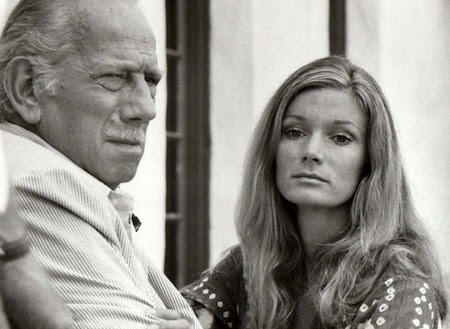
          If the title of this telefilm seems familiar, it’s because the play upon which this picture was based also provided source material for the Frederic March melodrama Death Takes a Holiday (1934) and the Brad Pitt romance Meet Joe Black (1998). In all iterations of the story, Death briefly assumes human form in order to investigate why humans cling so dearly to life, only to fall in love with a woman while spending time among the living. While not as impressive as the other Hollywood adaptations, the 1971 version on Death Takes a Holiday is palatable because the underlying storyline is so intriguing and because supporting performances elevate the experience. Also worth mentioning is the florid but sensitive script by veteran TV script Rita Lakin—even though her style tends toward soapy breathlessness intermingled with ornate speechifying, she connects with a handful of poignant moments. Sometimes neutralizing her work is graceless direction by Robert Butler, a three-time Emmy winner who did better work elsewhere; one assumes Butler was constrained by a meager budget and schedule.
          In the waters off a private island, Peggy Chapman (Yvette Mimieux) seemingly drowns, only to wake on shore alongside mysterious David Smith (Monte Markham), whom she assumes saved her life. Peggy invites David to her family’s nearby compound, where the large clan has gathered for a celebration. Some of the Chapmans welcome David warmly, but Peggy’s aging father, retired judge Earl (Melvyn Douglas), senses danger. As David and Peggy become more enamored of each other, Earl learns about something bizarre happening on the mainland—since the time of David’s arrival, no one on Earth has died. This causes Earl to realize that he’s seen David before during near-death experiences. Thus begins a strangely compelling cycle of philosophical discussions on the place mortality occupies in the universe, leading eventually to Earl’s attempts at changing his family’s destiny. Without Douglas and Myrna Loy (who plays his character’s wife), Death Takes a Holiday would be nearly disposable because Markham and Mimieux are, respectively, mannered and shallow. (Rendering equally perfunctory work is costar Bert Convy, whose character competes with David for Peggy’s affections.) Nonetheless, Douglas and Loy lend so much gravitas that their scenes cast a regal glow across the entire movie.

Death Takes a Holiday: FUNKY

Tuesday, August 25, 2015

Racquet (1979)


An ugly riff on Shampoo (1975) substituting professional tennis for hairdressing while stealing many of the earlier film’s plot elements, Racquet was one of a handful of star vehicles for Bert Convy, a quintessential ’70s personality who acted in dodgy movies and schlocky TV series before finding his niche hosting game shows. (To be fair, he was terrific as the leader of an est-type program in the 1977 football comedy Semi-Tough.) In the thoroughly rotten Racquet, Convy stars as Tommy Everett, an aging tennis pro who moonlights as a gigolo for the rich ladies of Beverly Hills. Dreaming of becoming a business owner, Tommy tries to talk his wealthiest patron, Leslie (Edie Adams), into bankrolling the purchase of a house with a massive court where Tommy can provide private lessons. Meanwhile, Tommy reunites with an old flame, Monica (Lynda Day George), and stupidly romances Leslie’s teenaged daughter, Melissa (Katherine Moffat)—shades of the Shampoo storyline involving Warren Beatty and Carrie Fisher. Racquet compares poorly to Shampoo, since Racquet emulates the earlier film’s raunchiness without any of the sophistication that made Shampoo relevant. Typical of Racquet is a grotesque scene of Leslie humping Tommy while screaming about his “bionic peeper,” or the equally distasteful scene of Leslie’s husband, Arthur (played by TV-comedy icon Phil Silvers), requesting that Leslie act out his Thanksgiving-themed sex fantasy. (“Will you make turkey sounds for me? Gobble-gobble when we climax?”) The love story between Monica and Tommy is riddled with vapid clichés, including an endless romantic montage set to a dreary ballad, and the subplot about Tommy’s sexy roommate, Bambi (Tanya Roberts), is as pointless as the braying Bobby Riggs cameo and the goofy discotheque scene. Giving credit where it’s due, Convy looks credible as a tennis player and he uses all of his meager powers in a failed attempt to put this godawful material across.

Racquet: LAME

Sunday, January 25, 2015

1980 Week: Hero at Large


          An innocent fable very much in the Frank Capra mode, Hero at Large tells the story of a normal New Yorker who adopts the guise of a superhero simply because helping other people makes him feel good. Seeing as how his innocent motivations become complicated by money and romance, the goal of the story is asking whether a genuinely decent human being can find a place in the cynical modern world. Timing-wise, it didn’t hurt that Hero at Large was released two years after the blockbuster success of Superman (1978), starring Christopher Reeve, which demonstrated the public’s appetite for old-fashioned heroism. Given this context, there’s every reason to believe Hero at Large could have become a sleeper hit had it delivered on its own promise. Unfortunately, neither director Martin Davidson nor screenwriter Stephen J. Friedman delivered exemplary work. Hero at Large is earnest and periodically charming, but it’s also contrived, shallow, and trite. There’s a reason why the filmmakers couldn’t attract A-list acting talent, even though leading man John Ritter—attempting to translate his Three’s Company TV fame into movie stardom—gives a likeable performance.
          Set in New York, the story focuses on Steve Nichols (Ritter), an actor who can’t catch a break in his career. To pay the bills, he takes a gig dressing as Captain Avenger, the comic-book character whose exploits have been adapted into a new movie. The idea of using actors to portray Captain Avenger at theaters showing the film was hatched by PR man Walter Reeves (Bert Convy), whose company also handles publicity for the re-election campaign of the city’s mayor. One evening, while still dressed as Captain Avenger, Steve foils a burglary at a convenience store. His bravery makes headlines, so Walter hatches a scheme—find out which actor did the good deed, put the man on the payroll, and use the resulting publicity to enrich the mayor’s image. Two birds with one stone.
          As should be apparent, the plot is rather laborious, and a good portion of the film is wasted on dry scenes explaining the logic of circumstances and situations. This talky approach drains most of the fun out of the enterprise. Similarly, Steve’s repartee-filled romance with his next-door neighbor, Jolene Walsh (Anne Archer), strives for the effortless wit of classic screwball comedy but doesn’t come close. (Fun fact: Archer was one of the actresses who auditioned for the part of Lois Lane in Superman, eventually losing the role to Margot Kidder, so Hero at Large represents superhero-cinema sloppy seconds.) While the fundamental shortcoming of Hero at Large is the weak script, Davidson could have helped matters considerably by adopting a breakneck pace. Instead, the movie sprawls across 98 minutes that feel much longer. So, while it’s hard to dislike a movie that tries this hard to engender goodwill, it’s equally difficult to generate enthusiasm for something that’s mired in well-meaning mediocrity.

Hero at Large: FUNKY

Thursday, June 26, 2014

Jennifer (1978)


          Like any successful horror movie, the campy Stephen King adaptation Carrie (1976) inspired more than its share of imitators. And while many Carrie rip-offs were made for television, the shameless copy Jennifer received a proper theatrical release. Echoing many key points of the plot from King’s novel, Jennifer concerns a put-upon teenager who wrestles with ostracism at school and religious oppression at home, all the while suppressing a supernatural power that could turn deadly if unleashed. Cowriter/producer Steve Kravitz is so blatant about copying Carrie that he includes doppelgangers for the previous film’s most important characters: The Bible-thumping mom in Carrie becomes a Bible-thumping dad in Jennifer, the kind-hearted female gym coach in Carrie becomes a kind-hearted male teacher in Jennifer, and the mean-girl tormentor in Carrie becomes—a mean-girl tormenter in Jennifer. About the only significant deviation that Kravitz provides is the nature of the title character’s special gift. Whereas Carrie uses telekinesis, Jennifer has some vaguely defined ability to control and/or magically generate snakes.
          Beyond employing a recycled storyline, Jennifer also suffers from a paucity of narrative events—the movie is nearly halfway over before the first supernatural occurrence. As such, viewers checking out Jennifer should lower their expectations considerably. Having said all that, Jennifer has a fun nocturnal vibe, leading lady Lisa Pelikan offers an appealing combination of fragile beauty and hidden strength, and the movie’s finale is a slice of kitschy-’70s heaven thanks to the rampant overuse of haze filters and star filters.
          When the movie begins, West Virginia-born Jennifer Baylor (Pelikan) tries to balance responsibilities at home and at school while living in a cosmopolitan metropolis. She’s the primary caretaker for her aging father, Luke Baylor (Jeff Corey), an alcoholic widower who runs a pet store. Concurrently, she’s a scholarship student (read: charity case) at a haughty private school. Rich bitch Sandra Tremayne (Amy Johnson) puts Jennifer in her crosshairs because hunky teacher Jeff Reed (Bert Convy) takes a shine to Jennifer. Torment ensues and revenge follows. The middle of the movie is a bit of a slog, since Amy’s abuse of Jennifer pales next to the emotional torture featured in Carrie, but all of the actors in Jennifer contribute valiant work. (Nina Foch is especially good as the private school’s ice-queen administrator, whose philosophy is that “the rich are always right.”) The movie benefits tremendously from a robust score by Porter Jordan, which climaxes with a flamboyant passage putting a prog-rock spin on traditional Phantom of the Opera cues. And if Jennifer is ultimately little more than derivative and silly, it’s useful to remember that the cartoonish and salacious Carrie didn’t set the bar for cinematic quality particularly high.

Jennifer: FUNKY

Friday, March 9, 2012

Semi-Tough (1977)


          Had the people making this comedy been more judicious about picking their satirical targets, Semi-Tough might have become a semi-classic, because the actors and behind-the-scenes players were all at the height of their considerable powers. Unfortunately, the movie is a muddle because of indecision about whether to focus on the seedy side of pro football or the über-’70s trend of “est” training.
          The picture starts out like gangbusters, introducing unlikely roommates Billy Clyde Puckett (Burt Reynolds), Marvin Tiller (Kris Kristofferson), and Barbara Jane Bookman (Jill Clayburgh). Billy Clyde and Marvin are the star players for a Southern football team, which is owned by Barbara Jane’s wacky daddy, Big Ed Bookman (Robert Preston). Sharing space platonically because they’ve been friends since childhood, Billy Clyde, Marvin, and Barbara Jane are funny, hip, and neurotic, serious about sports but irreverent about everything else. As the story progresses, Marvin and Barbara Jane become a couple, which causes Billy Clyde to realize he’s in love with Barbara Jane.
          The movie also introduces wild characters like an oily PR man (Richard Masur), a psychotic lineman (Brian Dennehy), and a blissed-out Russian field-goal kicker (Ron Silver). On and off the field, the football stuff is great, with debauched parties, philosophical locker-room interviews, and tense practice sessions. However, the movie gets sidetracked when Marvin falls under the spell of Friedrick Bismark (Bert Convy), the smoothie behind “B.E.A.T. therapy,” a campy spin on “est.”
          In real life, Erhard Seminars Training (‘est”) was a therapeutically dubious fad in which patrons paid exorbitant fees to sit in hotel conference rooms for marathon character-building sessions without bathroom breaks. “B.E.A.T.” takes the extremes of “est” even further; Bismark labels all his followers assholes and spews empty psychobabble (“There aren’t any answers because there aren’t any questions”). Convy, a ’70s-TV stalwart best known for hosting game shows, is actually very good in Semi-Tough, revealing the savvy slickster behind the spiritual-guru façade. Like the football material, the “B.E.A.T.” stuff is great, but it belongs in its own movie. Complicating matters even further, the romantic triangle between the protagonists never really connects, since Marvin transforms into such a B.E.A.T.-addicted space case that he’s easily outmatched by down-to-earth Billy Clyde.
          That said, Clayburgh, Kristofferson, and Reynolds are wonderful, as is Preston; the scene in which Preston and Reynolds scamper around Big Ed’s office on their hands and knees because Big Ed is experimenting with “crawling therapy” is terrific. In fact, there’s so much to like in Semi-Tough that it’s dismaying to report how widely the film’s director, the sometimes-great comedy specialist Michael Ritchie, misses his mark. Still, viewers willing to treat the picture like a sampler platter will be amply rewarded: It may not be a proper cinematic meal, but it’s certainly the equivalent to a bunch of tasty snacks.

Semi-Tough: FUNKY

Thursday, December 15, 2011

Dallas Cowboys Cheerleaders (1979)


With their low-cut tops, tight hot pants, and gyrating dance moves, the Dallas Cowboys Cheerleaders became headline news after Super Bowl X in 1976, when the women were featured onscreen during a lull in the game’s network broadcast. Three short years and a handful of appearances on game shows and variety specials later, the squad was the focus of this TV movie, which scored blockbuster ratings. Not only is the actual Texas Stadium used as a primary location, many real Dallas cheerleaders play themselves in minor roles, and the cost ABC paid for this participation is painfully evident from the first frames: Dallas Cowboys Cheerleaders is a 90-minute endorsement of the cheerleading squad as the gosh-darn-wholesomest dance crew in the world. Helmet-haired ’70s game-show stalwart Bert Convy stars as a magazine editor who wants an exposé about the cheerleaders, whether it’s accurate or not, so he hires beautiful freelancer Laura Cole (Jane Seymour) to try out for the squad and get the inside scoop. The movie also features trite melodramas about wannabes including Betty (Pamela Susan Shoop), a housewife longing for something more; Ginny (Kathy Baumann), a social climber with her eye on Hollywood; Jessie (Lauren Tewes), an unlucky girl with a stalker on her tail; and Joanne (Ellen Bry), a returning cheerleader afraid she’s getting too old to shake her pom-poms. In other words, there’s not a whit of competition, drug use, or fraternizing. As Laura declares at one point, “The Dallas Cowboys Cheerleaders are everything that their PR says they are—they’re just a bunch of nice, down-home girls having some fun.” Whatever. In lieu of narrative interest, the movie offers G-rated cheesecake, with the various lovely starlets disco-dancing and rehearsing in not-very-revealing outfits while horrible music like the original song “Sunday Afternoon Fever” grinds on the soundtrack. A Seymour-free sequel, Dallas Cowboys Cheerleaders II, was broadcast in 1980.

Dallas Cowboys Cheerleaders: LAME